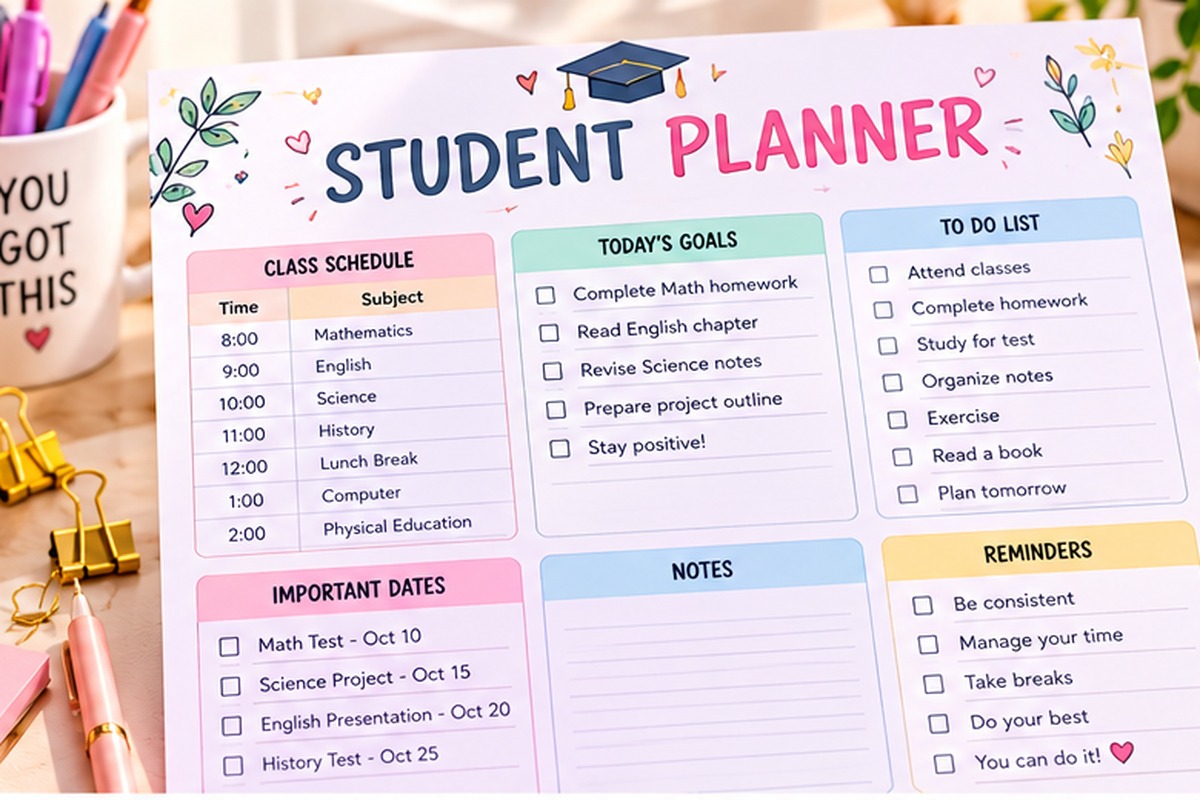
A student planner helps you organize classes, homework, exams, and personal goals in one simple place. Whether you attend school, college, or university, a clear plan can make busy study days easier to manage.
Students often juggle assignments, revision sessions, extracurricular activities, and deadlines. Without a reliable system, even small tasks can feel overwhelming. Fortunately, you don’t need an expensive app or complicated schedule to stay organized.
In this guide, you’ll discover how to use a free student planner, what to include in your daily and weekly schedules, and how to build a planning routine that actually works.
What Is a Student Planner?
A student planner is a tool that helps you organize academic responsibilities and personal activities. You can use a student planner printable, notebook, or digital template to track important dates and daily tasks.
A useful planner for students typically includes class schedules, homework lists, exam dates, study goals, and space for notes. For example, if you have a mathematics test on Friday, you can divide your revision into smaller sessions throughout the week instead of studying everything on Thursday night.
This simple habit makes your workload easier to understand and manage.
Why Every Student Should Use a Free Student Planner
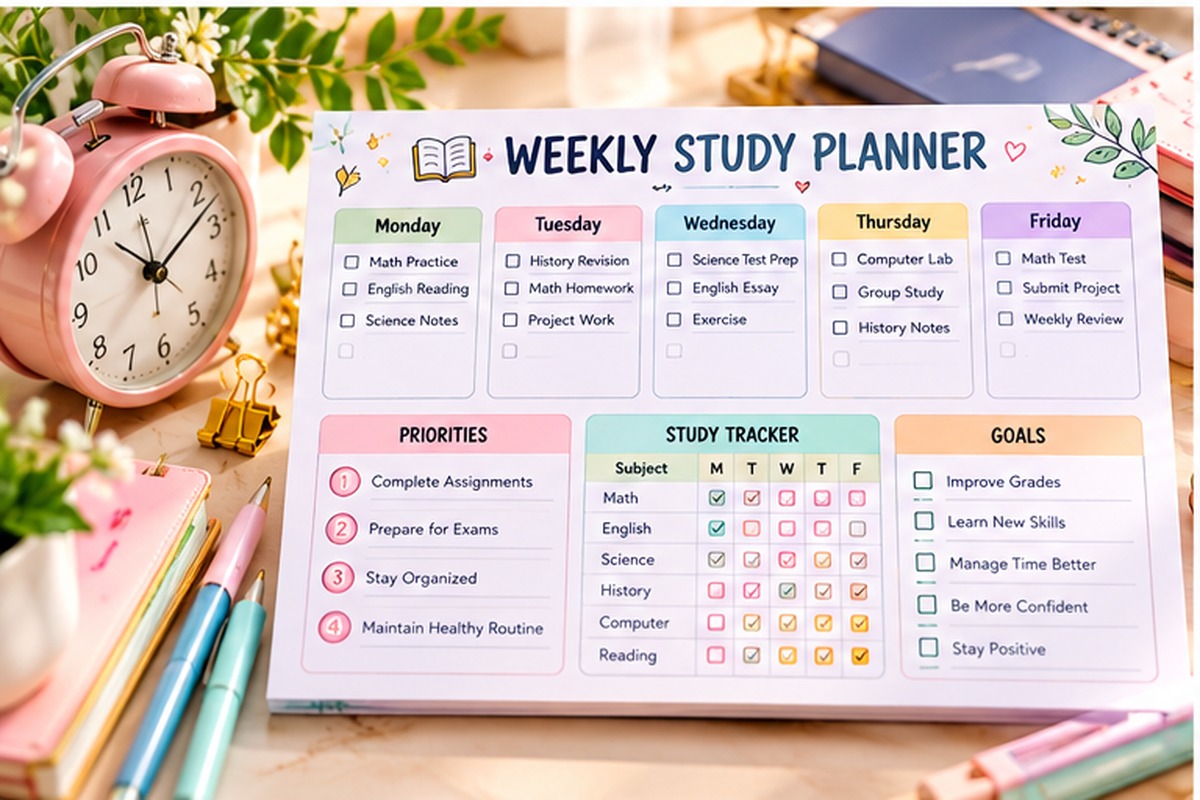
A student academic planner can support more consistent routines, help you see deadlines clearly, and make progress easier to track.
1. Keep Track of Homework and Assignments
Students receive homework from different subjects, sometimes on the same day. A student planner gives every assignment a clear place. Write down the task, subject, due date, and priority. Then, check your planner each afternoon to decide what needs attention first.
2. Prepare for Exams Without Last-Minute Stress
A study planner helps you spread revision across multiple days. Instead of writing “Study Science,” break the goal into smaller activities, such as reviewing Chapter 3, practicing ten questions, or revising important definitions. As a result, your study sessions become more specific and manageable.
3. Build Better Time Management Habits
Time management improves when you understand how much work you have and when you can complete it. A student planner makes it easier to reserve time for schoolwork, breaks, family activities, and hobbies. Remember, a realistic schedule should include rest, not just academic tasks.
4. Make Progress Visible
Checking off completed tasks creates a simple record of your progress. Over time, you can identify which routines work well and which subjects need extra attention.
Essential Sections to Include in Your Student Planner
A practical student planner doesn’t need dozens of complicated pages. Start with the sections you will actually use.
| Planner section | What to track |
|---|---|
| Daily schedule | Classes, tasks, and study sessions |
| Weekly planner | Assignments and weekly priorities |
| Homework tracker | Subject, task, and deadline |
| Exam planner | Test dates and revision topics |
| Study goals | Academic targets and progress |
| Notes section | Reminders and important information |
You can combine these sections or print them separately depending on your needs.
How to Use a Free Student Planner Effectively
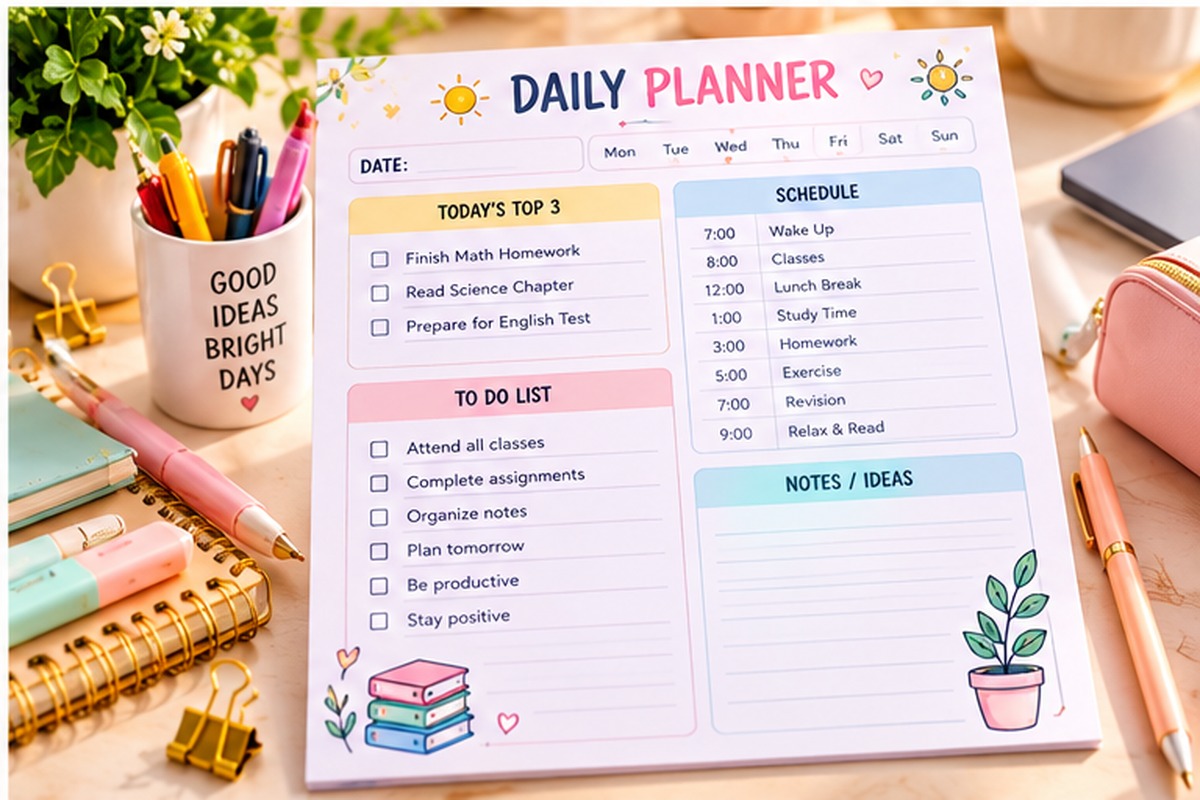
Step 1: Write Down Your Class Schedule
Begin by adding your regular classes and recurring activities. This creates a clear picture of the time you already have committed.
Step 2: Record Every Important Deadline
Add homework deadlines, quizzes, presentations, project submissions, and exam dates as soon as you learn about them. Don’t rely on memory alone.
Step 3: Choose Three Daily Priorities
Each morning or evening, identify three tasks that deserve your attention. For example: complete the English assignment, revise mathematics for 30 minutes, and prepare notes for tomorrow’s science class. If you finish these priorities, you can move on to smaller tasks.
Step 4: Divide Large Projects Into Smaller Tasks
A project that takes several weeks can feel difficult when you see it as one large assignment. Instead, divide it into research, outlining, writing, editing, and final review. Give each stage its own deadline in your student planner.
Step 5: Review Your Planner Every Evening
Spend five minutes checking what you completed and what still needs attention. Move unfinished tasks to realistic dates rather than filling tomorrow with more work than you can handle.
Daily vs. Weekly Student Planner: Which Is Better?
Both formats are useful, but they solve slightly different problems. A daily student planner works best when you need detailed schedules, hourly study blocks, and specific daily tasks. A weekly student planner helps you see upcoming assignments, exams, and priorities across several days.
For most students, combining both formats is a practical approach. Use the weekly planner to understand your workload and the daily planner to manage individual tasks. Explore our daily planner templates and weekly planner collection for more planning options.
Best Planner for Students: Daily, Weekly, and Academic Planning
The best planner for students makes schoolwork easier to manage without creating extra work. A student academic planner brings together class schedules, homework deadlines, exam preparation, and personal goals in one organized system. Choose a layout you can check regularly rather than one with unnecessary features.
A Simple Weekly Study Schedule Example
Here’s an example of how a student might organize a school week.
| Day | Main study priority | Additional task |
|---|---|---|
| Monday | Mathematics practice | Review class notes |
| Tuesday | English assignment | Read one chapter |
| Wednesday | Science revision | Complete homework |
| Thursday | Exam preparation | Organize notes |
| Friday | Weekly revision | Check deadlines |
| Saturday | Project work | Practice difficult topics |
| Sunday | Light review | Plan next week |
This schedule is only an example. Your student planner should reflect your actual classes, energy levels, and responsibilities.
Common Student Planning Mistakes to Avoid
Even a well-designed student planner won’t help much if you use it unrealistically.
-
- Overloading your schedule: Leave room for breaks and unexpected activities.
-
- Writing vague goals: Replace “Study more” with “Complete five algebra questions.”
-
- Ignoring unfinished work: Reschedule, simplify, or remove tasks as needed.
-
- Changing systems too often: Give your planner enough time to become part of your routine.
-
- Forgetting personal time: Sleep, exercise, hobbies, and social activities also deserve space.
Digital Student Planner vs. Printable Student Planner
A digital student planner works well for students who prefer editing schedules on a phone, tablet, or computer. Digital tools may provide reminders and synchronization across devices. A student planner printable is ideal for those who enjoy handwriting, want fewer digital distractions, or prefer keeping their schedule visible on a desk.
Neither option is automatically better. Choose the system you’re most likely to use consistently.
MyHomework Student Planner vs. Printable Planner
MyHomework Student Planner is a digital homework and class organization tool. Students searching for
my homework
student planner may prefer a dedicated app for tracking assignments. A printable student planner offers a paper-based alternative for writing schedules by hand and keeping pages in a binder. This article covers printable planning methods rather than offering or representing the MyHomework app.
Elementary Student Planner: Simple Planning for Younger Students
An elementary student planner should be easy to understand and quick to complete. Younger students can begin with a short homework checklist, a daily schedule, and space for reminders. Parents and teachers can help children build planning habits by reviewing completed tasks together.
Student Planner Printable PDF Free: How to Choose a Template
If you search for “student planner printable pdf free,” look for clear headings, enough writing space, and sections that match your school routine. A student planner PDF is convenient for printing and keeping in a folder or binder, but always check the available format and printable page size before downloading.
Visit our Student Planners collection to browse available planning resources. Print only the pages you need, and keep them in a binder, folder, or notebook.
For more guidance on organizing study time, explore the University of North Carolina Learning Center’s weekly planning advice.
Frequently Asked Questions About Student Planners
What is the best free student planner?
The best free student planner is one that matches your school routine. Look for a clear layout, enough writing space, and useful sections for assignments, deadlines, and study goals.
Can college students use printable student planners?
Yes. College and university students can use printable planners to organize lectures, coursework, examinations, projects, and personal commitments.
How often should I update my student planner?
Update your student planner whenever you receive a new assignment or deadline. A short daily review and a longer weekly planning session can help keep everything accurate.
Should I use a daily or weekly student planner?
Use a daily planner for detailed tasks and a weekly planner for upcoming responsibilities. Combining the two can provide a clearer view of your academic workload.
Can a free student planner help improve grades?
A student planner cannot guarantee better grades. However, it can support consistent study habits, earlier preparation, and better deadline management.
Is a student planner PDF better than a digital planner?
Neither format is automatically better. A student planner PDF is useful for printing and handwriting, while a digital planner offers more flexibility for editing and reminders.
What should a student academic planner include?
A student academic planner should include a class timetable, assignment tracker, exam schedule, weekly goals, and important deadlines.
Can elementary school students use a student planner?
Yes. An elementary student planner with simple checklists and short daily goals can help younger students practice organization.
Final Thoughts: Make Student Planning a Daily Habit
A student planner can turn a busy academic schedule into a more manageable routine. By recording deadlines, breaking down assignments, and reviewing your priorities regularly, you can spend less time wondering what to do next.
Start with a simple template, plan a few days at a time, and adjust your system as you learn what works.
Explore the Student Planners collection and begin building a study routine that supports both productivity and balance.
2 thoughts on “Student Planner: Free Printable PDF for Smarter Study Days”